Algorithmic trading is often taught as theory: market microstructure, execution, regulation, risk, and the broad ideas behind high-frequency trading. What is harder is giving students a practical environment where they can build, test, and explain strategies without the operational complexity of a live trading setup.
At Hong Kong Baptist University (HKBU), ProfitView is used to help bridge that gap in a postgraduate finance context.
The Course Context
The public course handbook shows that FIN 7850 Algorithmic and High-Frequency Trading is a 3-unit elective delivered in English and offered within HKBU’s MSc Finance (FinTech and Financial Analytics) programme.
According to the public course description, the subject covers:
- the operations of high-frequency trading
- the impact of HFT on modern markets
- major HFT strategies
- regulation and risk management
- implementation issues
That makes it a natural setting for practical strategy-building work, not just conceptual discussion.
How ProfitView Is Used
In HKBU’s teaching use, students work in teams and use ProfitView’s simulated exchange to build and test Python trading algorithms in a practical exercise that culminates in both a competition and a final presentation.
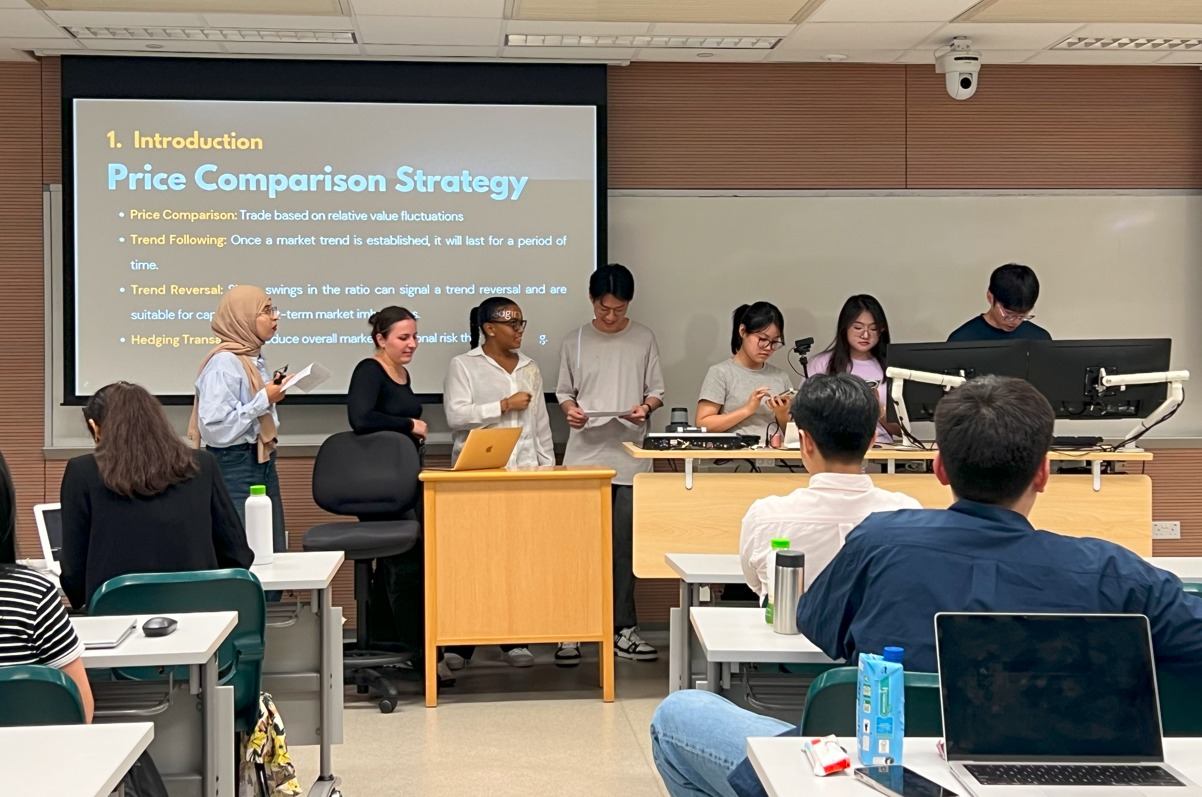
This matters because it changes the learning format from passive study to active implementation. Instead of only reading about market-making, arbitrage, or execution logic, students can turn ideas into code, test them in a controlled environment, and compare outcomes across teams.
The exercise also creates a more rounded basis for assessment. Rather than focusing only on short-run PnL, teaching staff can evaluate:
- the quality of the trading idea
- how well the team implemented it
- the reasoning behind the approach
- how clearly the team presents and explains the result
That broader format is especially valuable in education, where the goal is not simply to reward the most aggressive strategy, but to develop technical understanding, market intuition, and communication skills together.
Why a Simulated Environment Helps
For universities, a simulated market environment solves several practical teaching problems at once.
First, it gives students real-time data and a realistic workflow without introducing the financial, compliance, and operational issues that would come with live trading.
Second, it gives instructors a platform where students can write Python-based strategies directly, making the exercise accessible to learners who are strong analytically but still developing their engineering skills.
Third, it creates a common framework for comparison. When teams are working in the same environment, faculty can compare different ideas more fairly and students can learn from contrasting approaches rather than seeing only their own results.
From Theory to Implementation
One of the main educational benefits here is the move from theory into implementation.
Students studying algorithmic trading are often taught concepts such as signal generation, execution, and risk management in isolation. A practical assignment forces those elements to come together. A team has to decide what the strategy is trying to do, how it should behave in changing market conditions, and how the logic should actually be written in code.
That process is educational in its own right. Even before considering performance, students gain experience in:
- translating a market idea into explicit rules
- testing whether those rules behave as expected
- working collaboratively on technical tasks
- communicating their approach to others
The final presentation stage reinforces that learning. It is one thing to build a strategy; it is another to explain why it was designed that way, what the team observed, and what trade-offs they made.
A Good Fit for Modern Finance Teaching
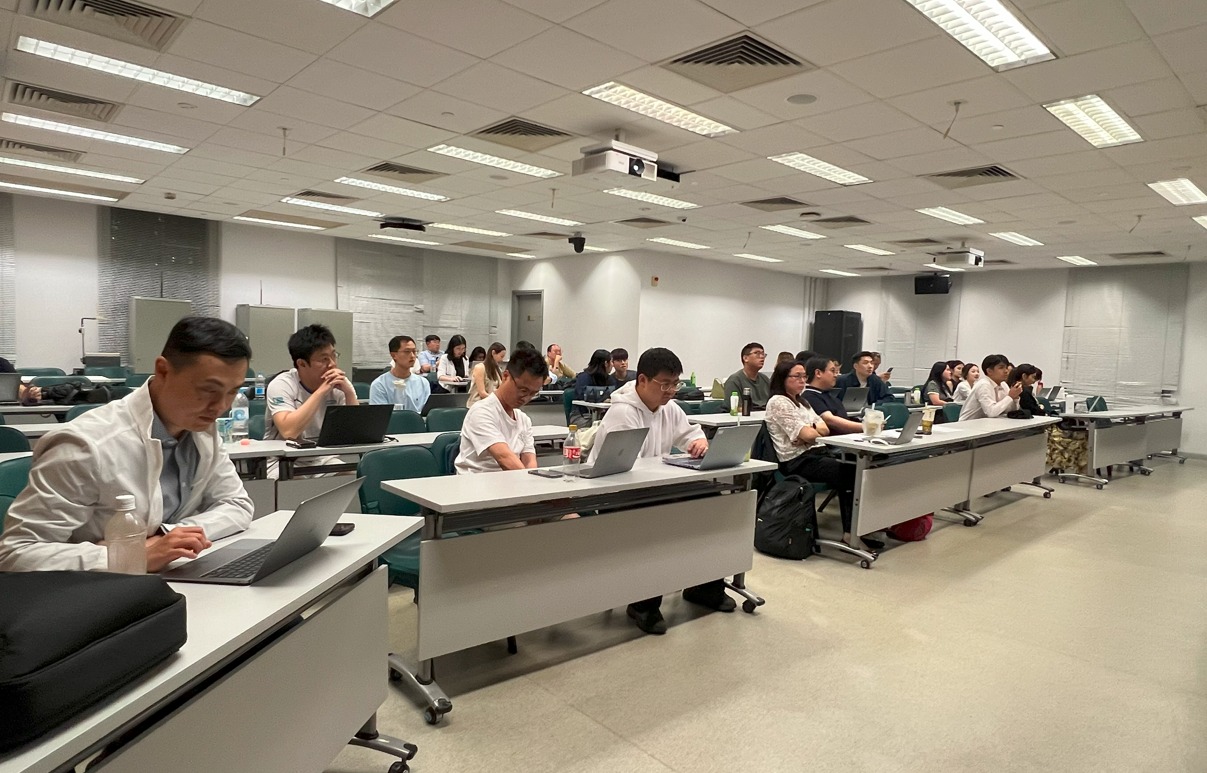
Programmes in finance and fintech increasingly need tools that let students engage with markets in a hands-on way. In that context, HKBU’s use of ProfitView is a good example of how an algorithmic trading platform can support classroom teaching without turning the course into a software deployment project.
The value is not just that students write Python. It is that they do so in a structured environment that supports experimentation, comparison, and assessment.
For educators, that makes algorithmic trading easier to teach. For students, it makes the subject much more concrete.
Learn More
You can view the public course and programme information here:
- HKBU FIN 7850 Algorithmic and High-Frequency Trading
- HKBU MSc Finance (FinTech and Financial Analytics)
If you run a university course and want to give students hands-on experience with algorithmic trading, get in touch with ProfitView.